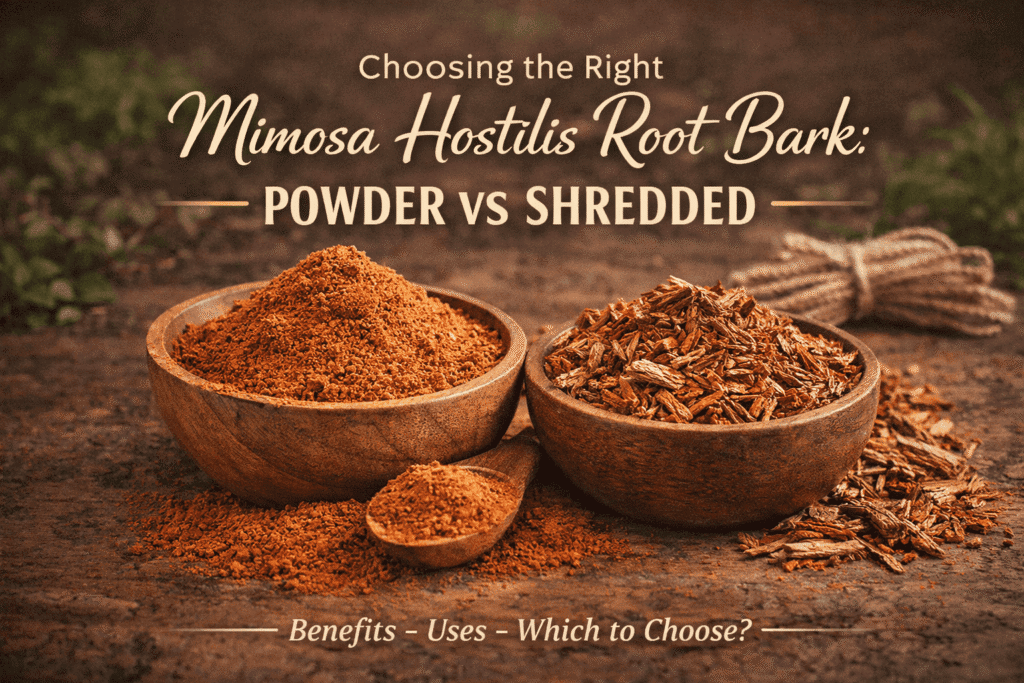
Powdered vs Shredded Bark Powdered: Fast extraction, small-scale use, easy mixing Shredded: Slow infusion, longer projects, traditional preparation Selecting the Right Size 100g–500g: Small projects or first-time users 1kg–3kg: Regular users or medium-scale projects 5kg–20kg: Bulk buyers, businesses, or commercial use Storage and Handling Tips Store in airtight containers Keep in a cool, dry place […]
Why Ethical Sourcing Matters Sustainable harvesting ensures the health of trees, ecosystems, and local communities. We plant one new tree for every 10kg sold, protecting biodiversity in Brazil. Our Sustainability Practices Mindful Harvesting: Only mature roots are collected Third-Party Lab Testing: Ensures purity and consistent quality Support for Local Communities: Fair trade and wages for […]
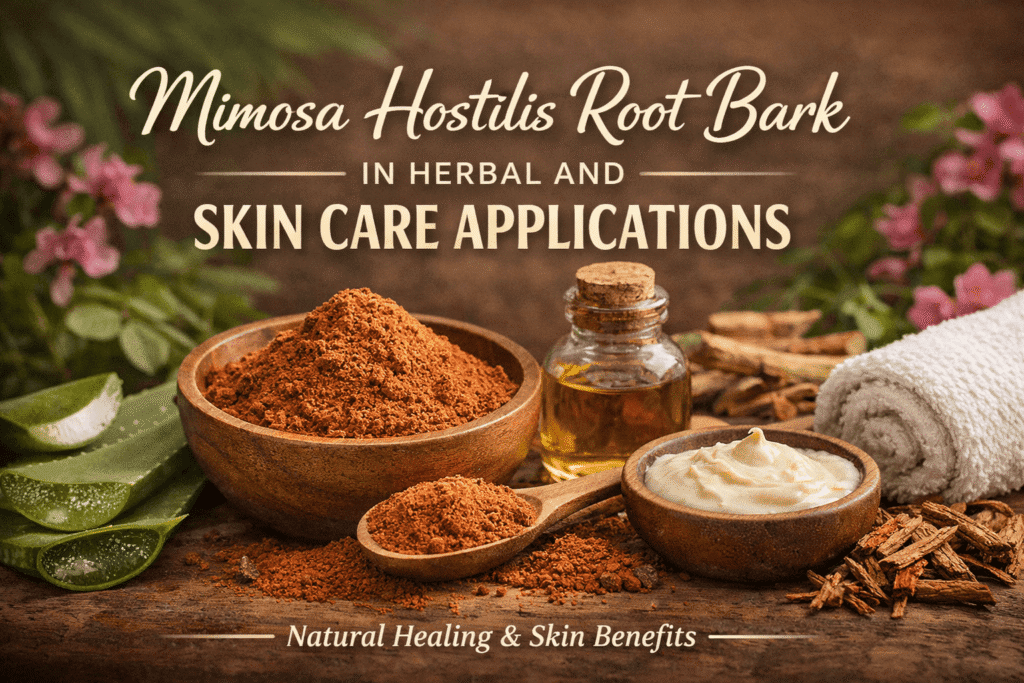
Herbal Applications of Mimosa Hostilis Root Bark Burns and scars: Apply MHRB paste directly on skin. Anti-inflammatory properties support skin healing. Used traditionally in tinctures and infusions for skin regeneration. Preparing MHRB for Skin Care Grind inner root bark to fine powder. Mix with distilled water or aloe gel for a paste. Apply to affected […]
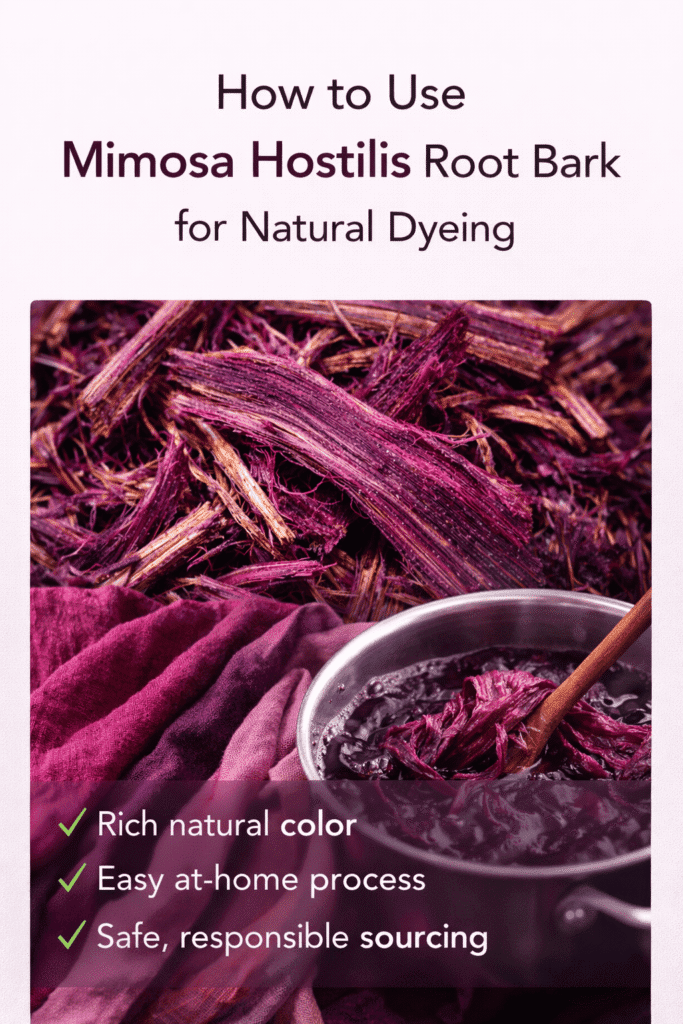
Preparing Mimosa Hostilis Root Bark for Dyeing Natural dyeing begins with choosing the right type of MHRB: Powdered bark – quick extraction, best for small projects Shredded bark – slower release, ideal for long infusions Step-by-Step Dyeing Process Soak 50–100g of bark in warm water for 12–24 hours. Strain liquid and prepare fabric (pre-wash to […]
Introduction to Mimosa Hostilis Root Bark Mimosa Hostilis Root Bark is derived from the Tenuiflora tree, native to regions of Brazil and Mexico. Often called Jurema Preta or Tepezcohuite, its inner root bark is deep purple and packed with bioactive compounds. Known for centuries for medicinal, ceremonial, and cosmetic uses, it is now a premium […]